
Your Dispatcher Can Create
a Violation Without Touching
the Truck
Your Dispatcher Can Create a Violation Without Touching the Truck

When a driver runs out of hours and still gets the load, the violation doesn't start with the driver. It starts with the message that told them the load had to be there by morning.
What the rule says
Under 49 CFR 390.6, motor carriers, shippers, receivers, and brokers can't coerce a driver to operate in violation of certain safety rules, including hours of service, vehicle inspection, and hazmat requirements. Coercion includes threatening to withhold work, discipline, or terminate a driver who refuses. Drivers can file a complaint with FMCSA.
How pressure actually shows up
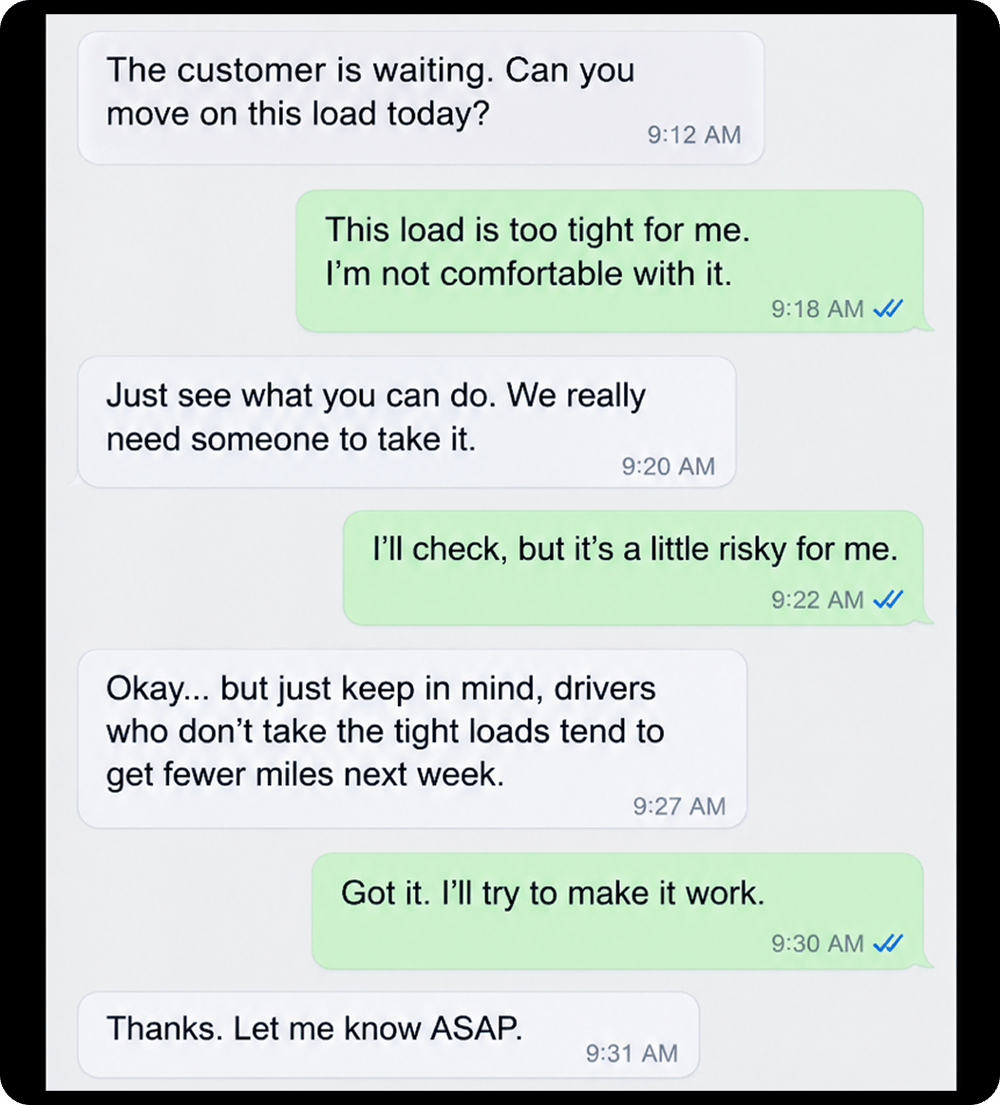
It rarely sounds like a threat. It sounds like "the customer is waiting" or "just see what you can do." Or a pattern where the driver who refuses a tight load gets fewer miles the next week. Drivers notice that pattern quickly, and so does an investigator reading the messaging records.
Those records last. Texts and dispatch messages turn up in audits and in litigation, where I've seen a single message change how a case reads.
The retention cost
Drivers leave carriers that push them past their limits. You pay twice, once in violation risk and once in recruiting.
What to do about it
- Train dispatchers on the basics of hours of service so they know what a driver can legally take.
- Give drivers a simple way to say a load doesn't work without penalty.
- Check dispatch messaging periodically for pressure you didn't intend.
- Reward the drivers who make the safe call.
Most owners don't see this problem because it happens in a text thread, not on a form. If you want to know what your dispatch process looks like from the outside, bring it to the weekly member call and we'll look at it together.
Latest Articles & Training Videos
Understanding CSA Scores in Trucking: Why They Matter
The Difference Between a DOT Policy and Actual Execution.
Why Your CSA Score is a Lagging Indicator.
Helping Trucking Companies turn compliance into profits
W175N11163 Stonewood Drive, Ste 108, Germantown, WI 53022
hello@truckingwins.com