
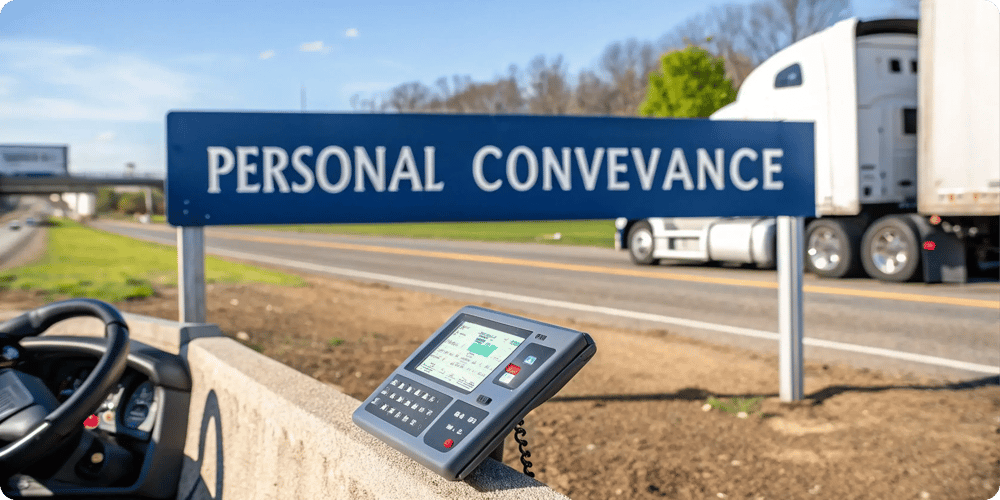
Personal Conveyance: The HOS Rule Drivers Stretch Until It Breaks
Personal conveyance is one of the most misused statuses on a driver's log. I saw it abused at the roadside for years, and ELD data makes it easier to spot now, not harder.
What it actually is
PC is moving a commercial vehicle for personal reasons while the driver is off duty. Think of driving to a restaurant, a motel, or home after the carrier has released the driver from work. Under current FMCSA guidance, it doesn't matter whether the trailer is loaded. What matters is who the trip benefits.
Where drivers cross the line
- Using PC to creep closer to the delivery after running out of hours. That's advancing the load, and it's a violation.
- Moving to a shipper, receiver, or fuel stop because dispatch asked.
- Logging PC after already being dispatched on the next load.
Moving to the first reasonably available safe place to rest after loading or unloading can qualify. Driving 60 extra miles to a better truck stop usually doesn't.
How investigators find it
Auditors line up your PC entries against dispatch records, fuel receipts, and delivery times. A string of long PC moves followed by an on-time delivery reads as falsified hours of service. A short PC entry with a clear annotation reads as exactly what it is.
What to do about it
- Write down what your carrier allows for PC, and train drivers on it.
- Require an annotation on every PC entry.
- Review PC use monthly. A policy nobody checks only adds to your liability.
PC problems are cheap to fix before an audit and expensive to explain during one. If you want to know how your drivers' PC entries would look to an investigator, bring a sample log to the weekly member call and we'll go through it together.
Browse by Author:
Bibliomania:
Have you watched the mini-movie that started the "Secrets Of Success" movement yet? If not, take 17 minutes today to see what all of the buzz is about:

Trucking Wins Pages
Trucking Wins – All Rights Reserved © 2026 | W175N11163 Stonewood Dr, Ste 108 Germantown, WI 53022
Terms Of Service | Privacy | DMCA Policy